Every resource
Cluster, Workloads, Config, Network, Storage, Access Control and Custom Resources, with the columns and actions you expect.
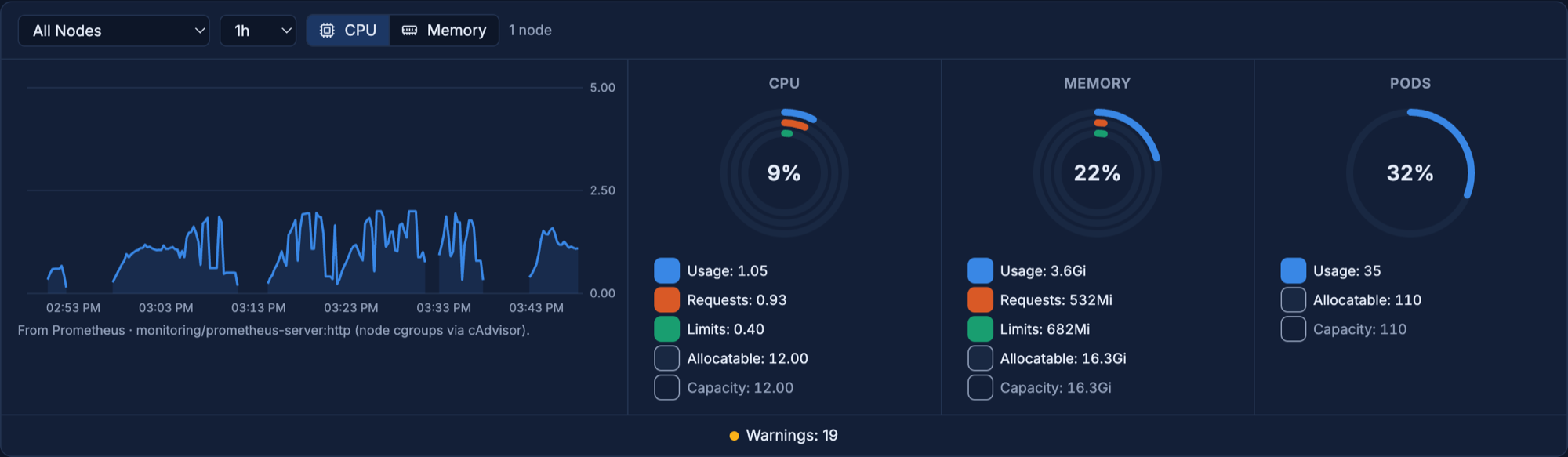
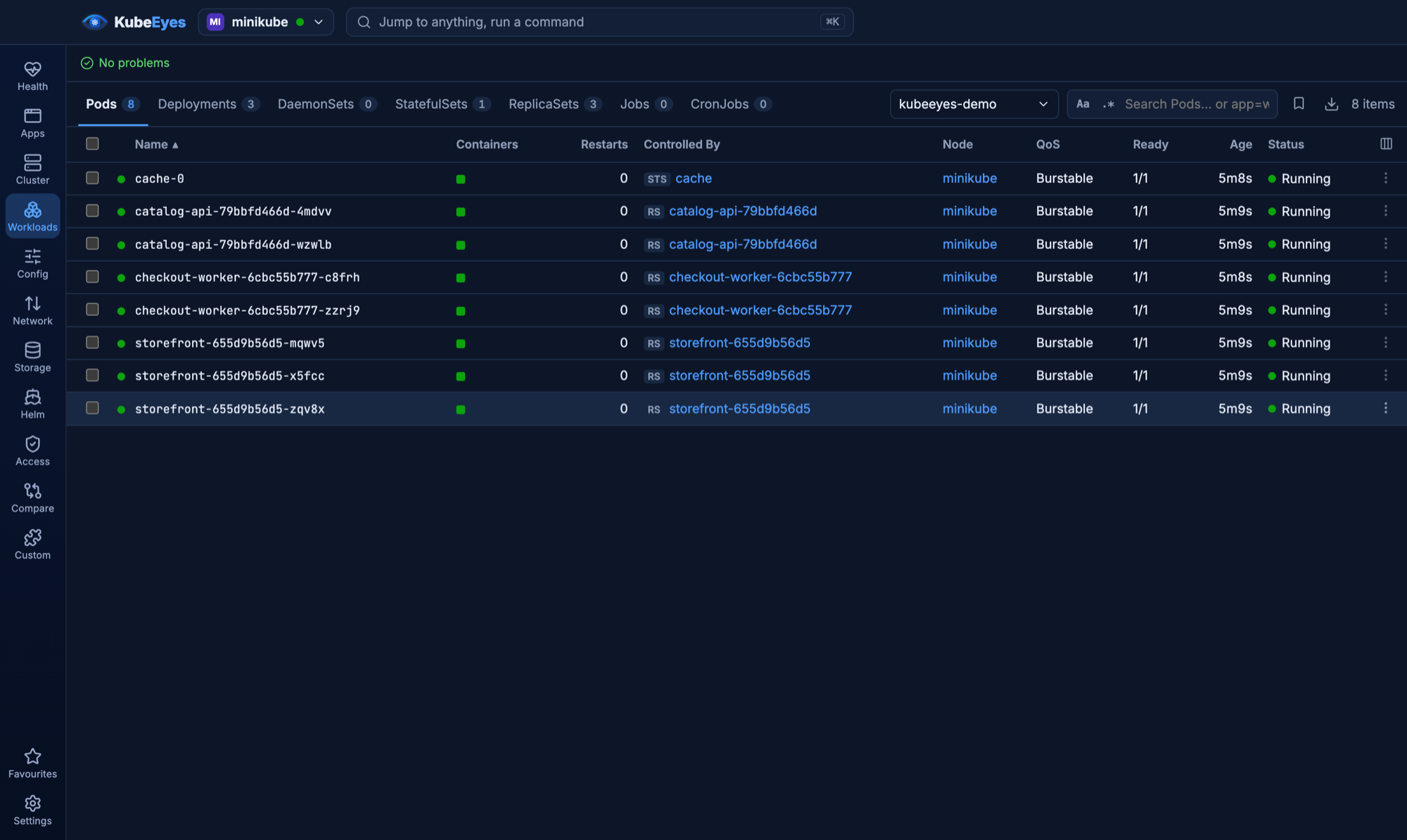
Your clusters, at a glance. KubeEyes is a free, fast Kubernetes desktop app for macOS: browse pods and every resource, tail logs, open shells, edit YAML and manage Helm releases, with guard rails around production.
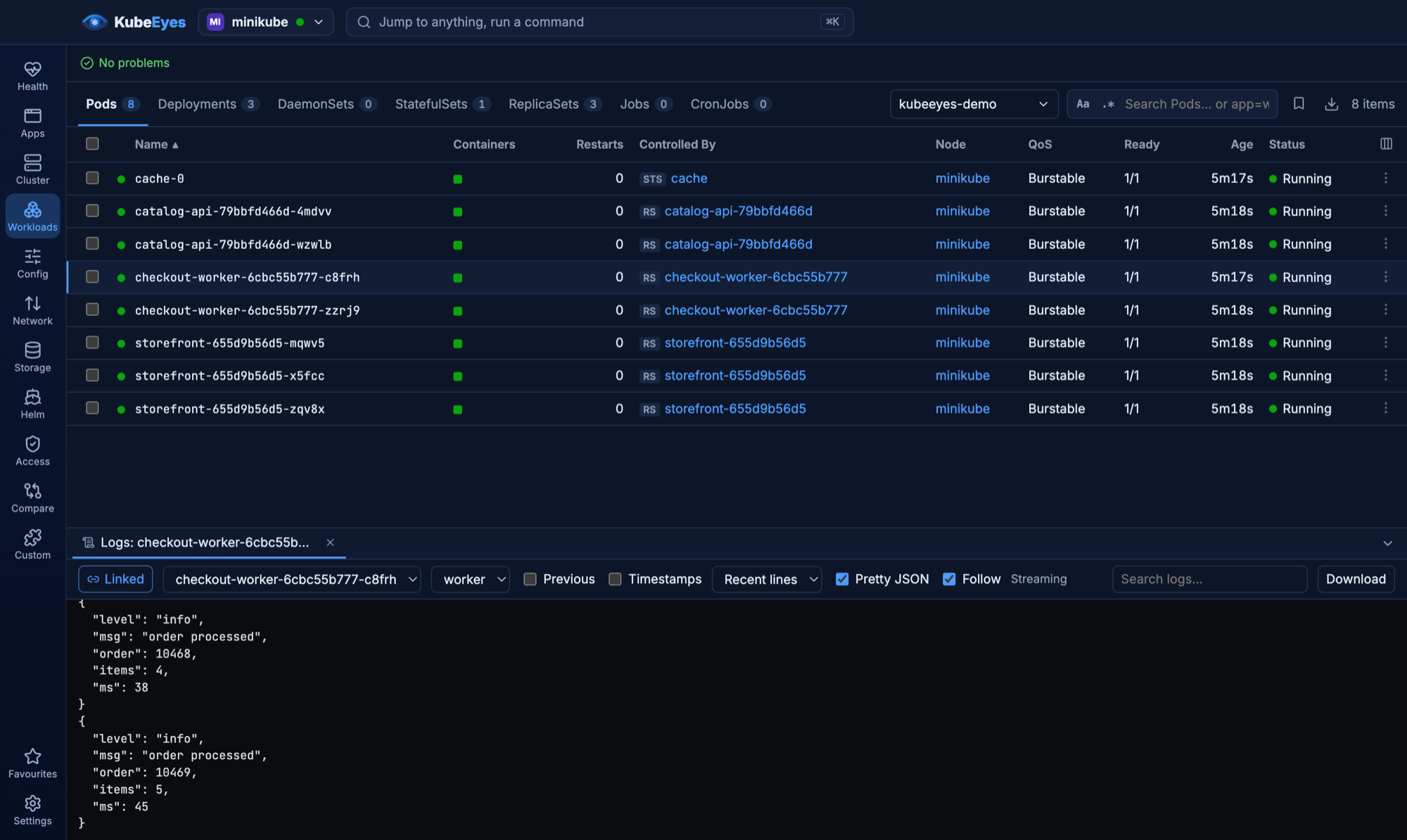
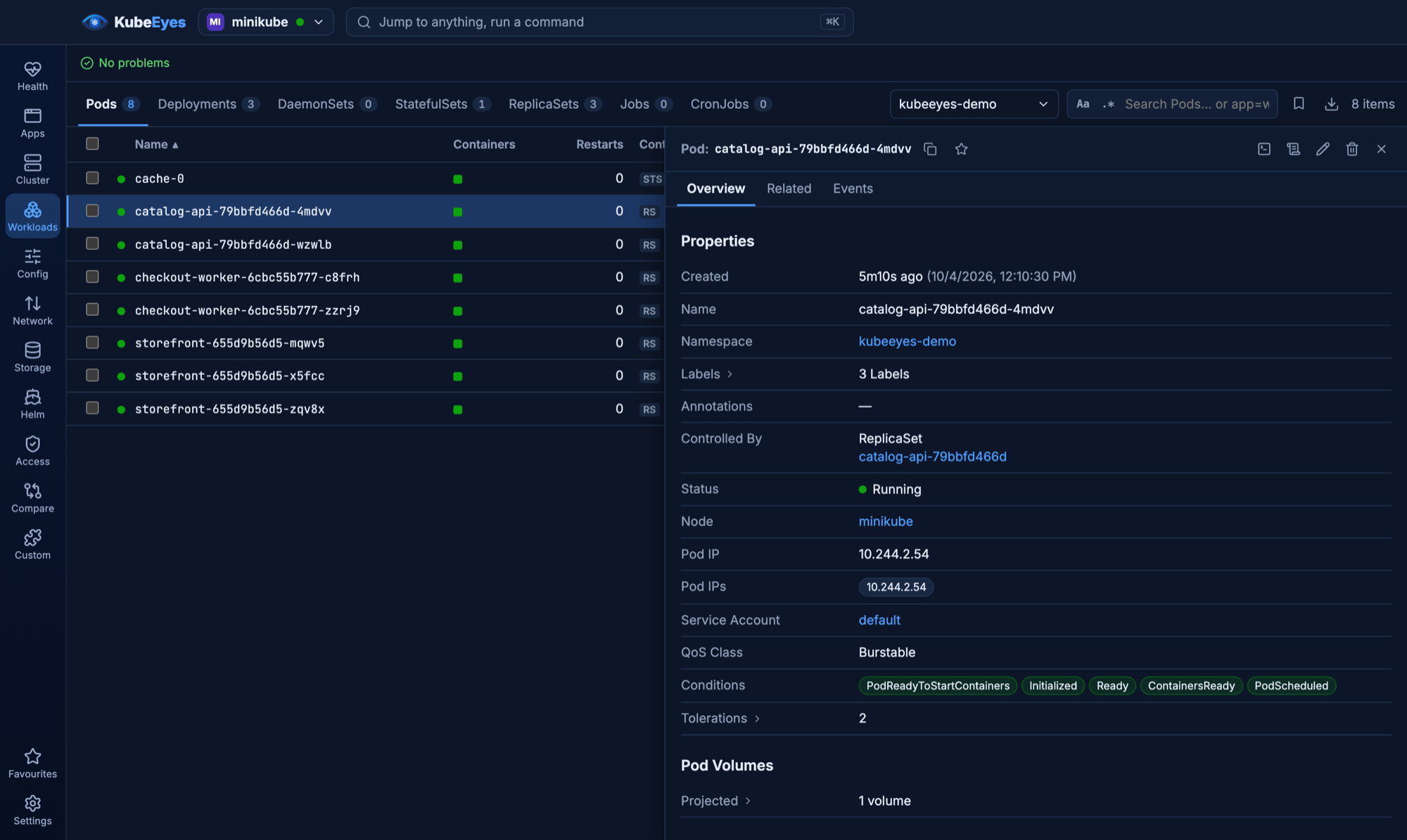
Every section of your cluster, from Workloads to Custom Resources, in a quick native-feeling app that stays out of your way.
Cluster, Workloads, Config, Network, Storage, Access Control and Custom Resources, with the columns and actions you expect.
Scans your AWS profiles and lists EKS clusters in every enabled region, grouped by account. Pick one and it's connected.
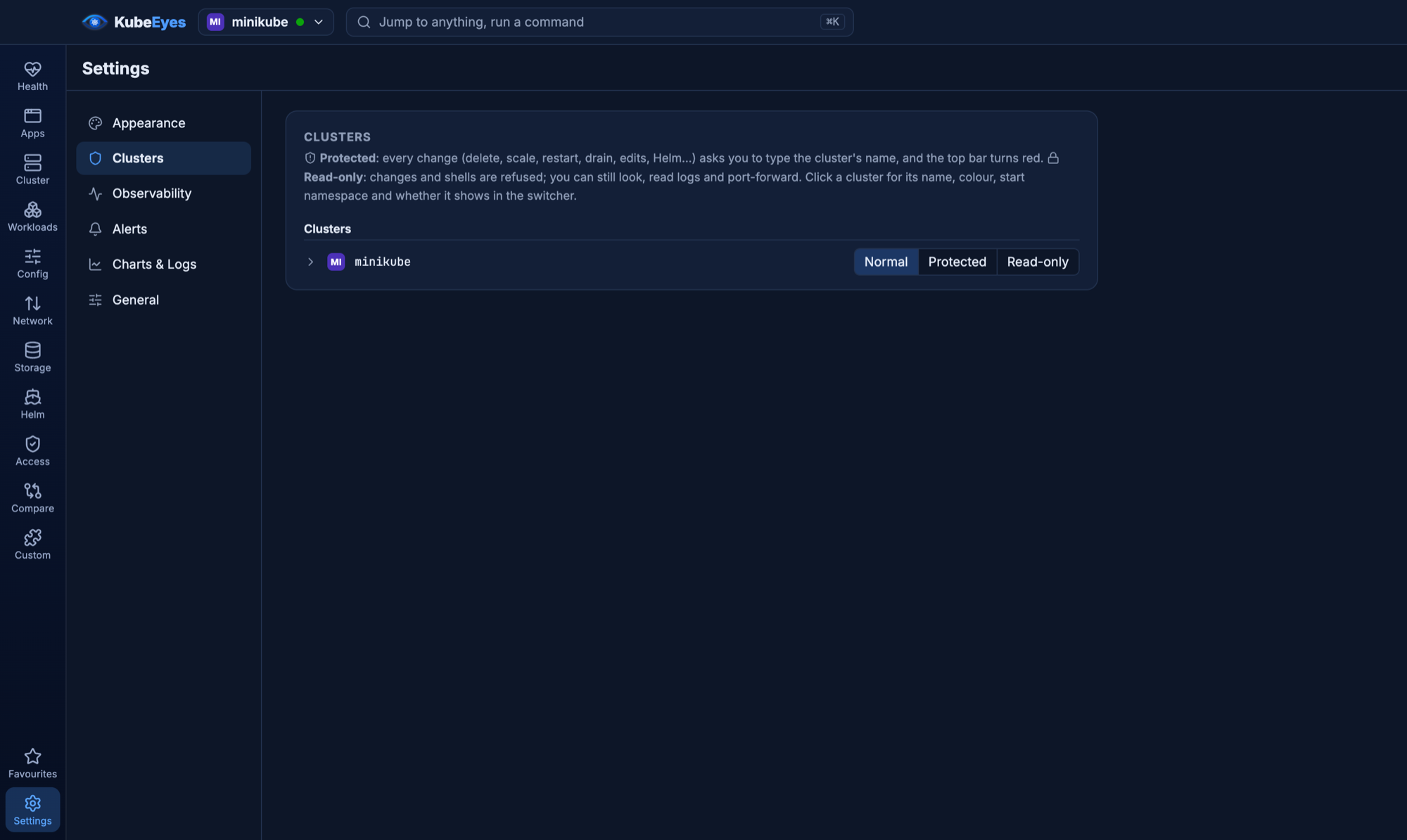
Mark clusters as protected or read-only. Risky actions ask first, and deletes need you to type the name.
Follow any container with time ranges, timestamps, search and pretty-printed JSON.
Open a terminal in any pod or node, and forward service ports to localhost with one click.
A proper code editor for any resource, plus inline editing for ConfigMap and Secret values.
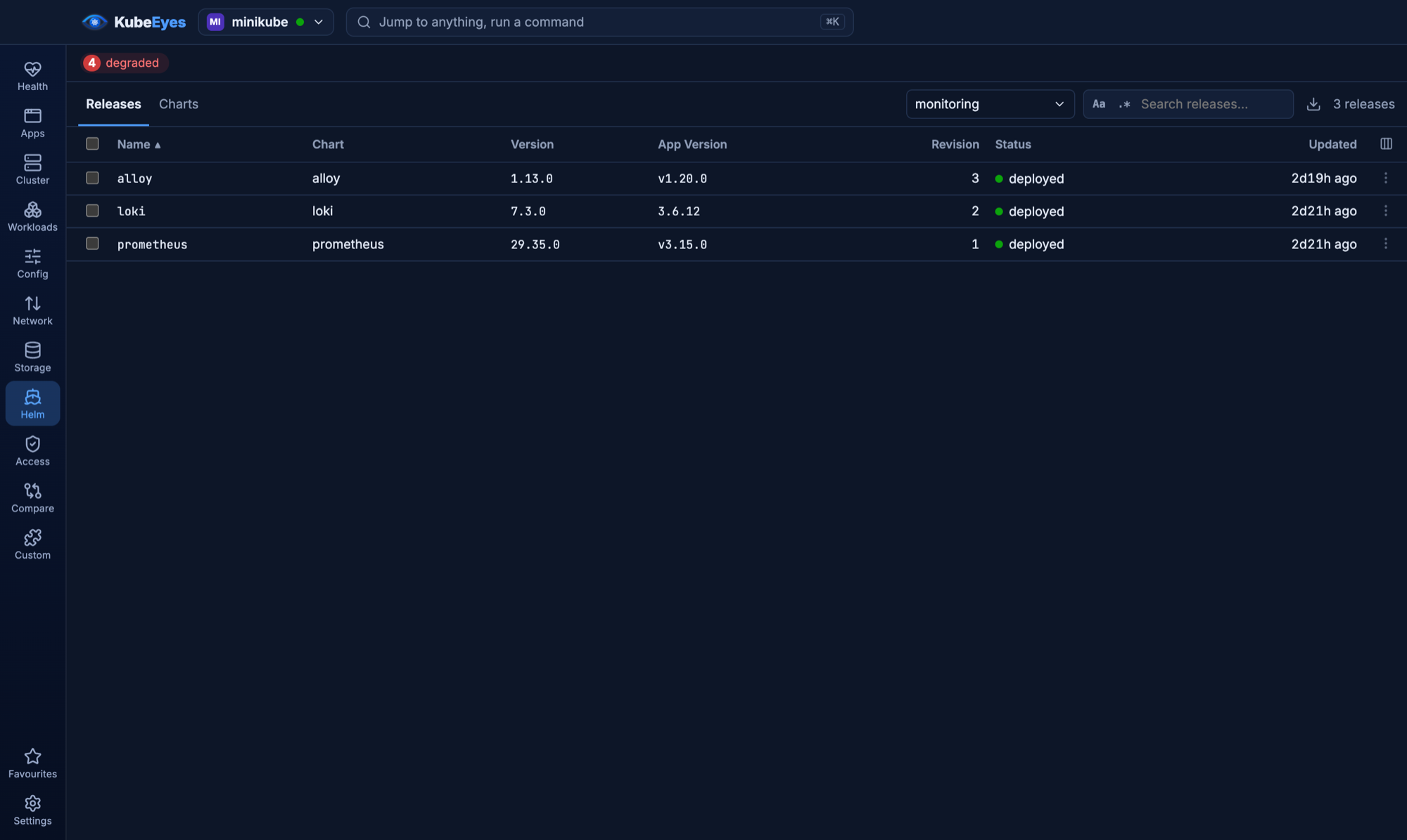
Browse chart repos, install with a values editor, upgrade, and roll back to any revision, using your helm CLI.
Ocean, Midnight or Classic, following macOS light and dark. Jump anywhere from the command palette.
KubeEyes isn't signed by Apple yet, so macOS blocks it the first time. One Terminal command clears that, and from then on it opens like any other app.
Get the .dmg from the Download button. It runs natively on Apple Silicon and Intel Macs.
Open the .dmg and drag the icon onto the Applications folder.
Paste the command from the box into Terminal. It removes the quarantine flag macOS adds to downloaded apps.
Launch it from Applications or Spotlight as usual. You only need the command again after installing a new version.
Needed if macOS says “KubeEyes is damaged and can't be opened” or “cannot be opened because Apple cannot check it”. The app isn't damaged; macOS just can't verify who made it.
xattr -dr com.apple.quarantine /Applications/KubeEyes.appWhy the extra step? Apps from outside the App Store need an Apple Developer ID signature and notarisation for macOS to open them silently. KubeEyes doesn't have those yet; they're on the roadmap, and this step will go away.
Yes. KubeEyes is free to download and use, with no account and no sign-up.
Yes. KubeEyes is one universal app that runs natively on Apple Silicon (M1 and later) and Intel Macs, on macOS 13 Ventura or later.
Any cluster in your kubeconfig, the same file kubectl uses: Amazon EKS, Google GKE, Azure AKS, on-premises clusters, and local clusters such as minikube, kind or Docker Desktop. Exec authentication plugins work.
It reads your AWS CLI profiles, lists the EKS clusters in every enabled region grouped by account, and connects with aws eks get-token, so anything the AWS CLI can use works in KubeEyes.
No. There is no telemetry, analytics or account. KubeEyes talks only to your clusters' API servers, to AWS when you use EKS discovery, and to Prometheus or Loki running in your own clusters.
You don't need kubectl: KubeEyes talks to the Kubernetes API directly using your kubeconfig. The Helm views use the helm CLI, and Amazon EKS clusters use the AWS CLI.
Yes. Mark a cluster Protected and every change asks you to type the cluster's name first, or mark it Read-only to refuse changes and shells while you can still browse resources, read logs and port-forward.
KubeEyes isn't signed by Apple yet, so macOS quarantines it after download. Run xattr -dr com.apple.quarantine /Applications/KubeEyes.app once in Terminal, then open KubeEyes normally.
~/.kube/config or $KUBECONFIG, the same file kubectl uses.aws eks get-token.brew install helm. Homebrew tools are found even when KubeEyes is opened from Finder.